
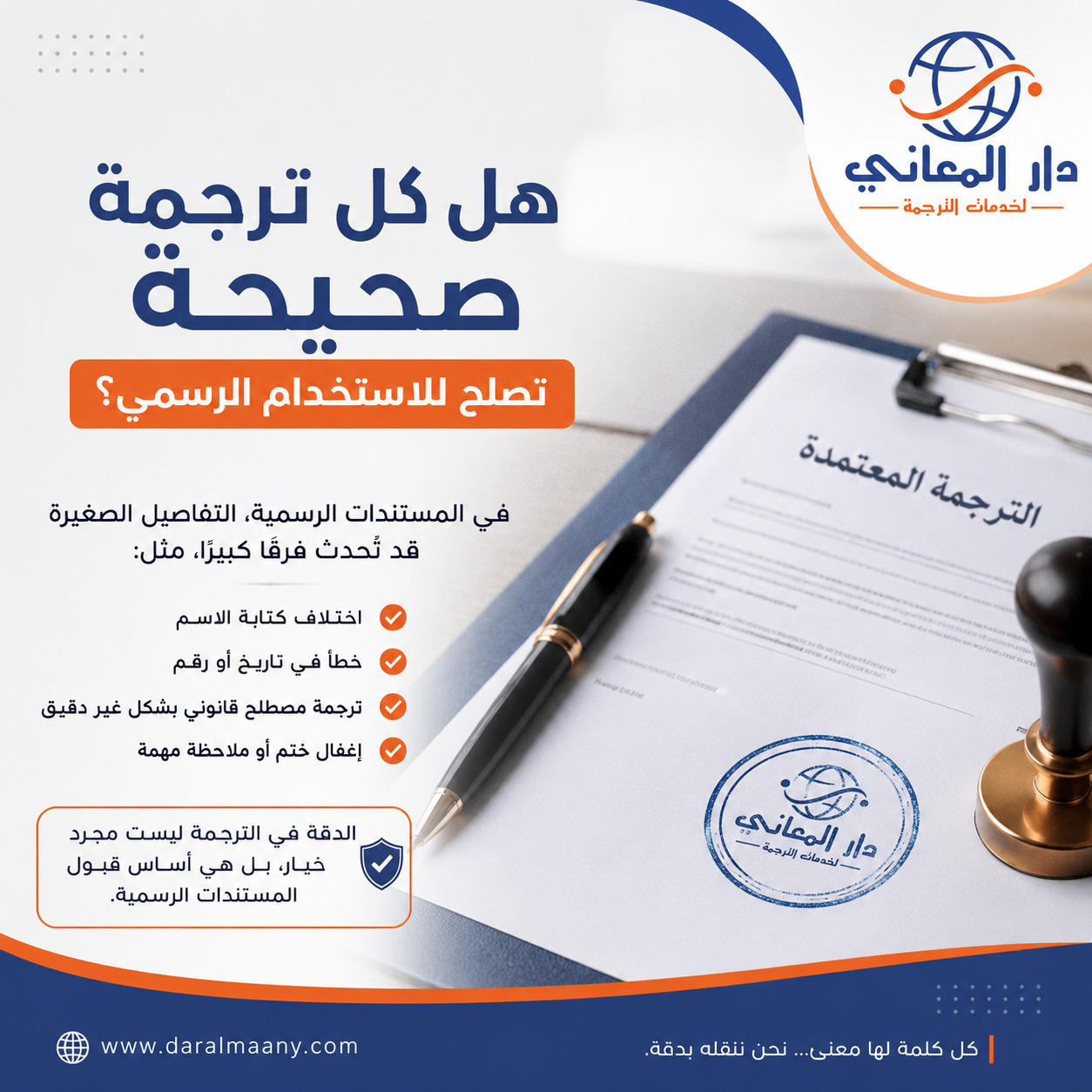
Many people assume that an official or legal translation is simply a matter of accurately conveying meaning from one language to another. In reality, however, not every linguistically correct translation is suitable for official use before government authorities, embassies, universities, or other institutions.
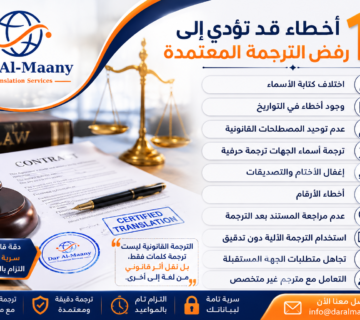
In many cases, documents are not rejected because of poor translation, but because of seemingly minor details. A name that does not match the passport, an incorrect date or document number, an inaccurately translated legal term, or even the omission of a stamp, note, or endorsement may create serious issues when a document is submitted for official purposes.
For official documents, accuracy extends beyond language. Every name, date, number, stamp, and notation must be transferred precisely as it appears in the original document. Even a small discrepancy can result in delays, requests for correction, or rejection of the document.
This is why professional translation is not limited to translating text. It also involves careful review of all data, terminology, and document details to ensure consistency, accuracy, and compliance with official requirements.
A successful official translation is not merely one that sounds correct. It is a translation that accurately reflects the original document in every detail and can be used with confidence before official authorities.